From Rajasthan’s Painted Courts to the Objects We Live With
There are things made quickly.
And then there are things made by people who seem to have an entirely different relationship with time.
In Rajasthan, painting has been one of those things for centuries.
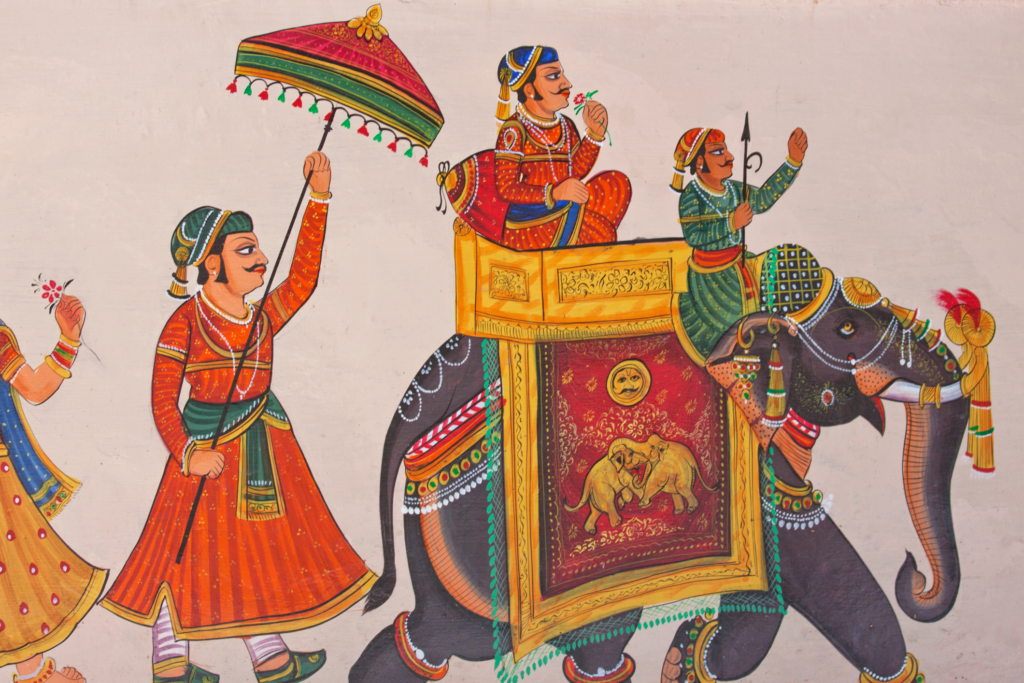
Look closely at a traditional Rajasthani miniature and the first thing you notice may be the color: saturated reds, deep greens, impossible blues, flashes of gold. Look longer and something else begins to emerge.
The astonishing precision.
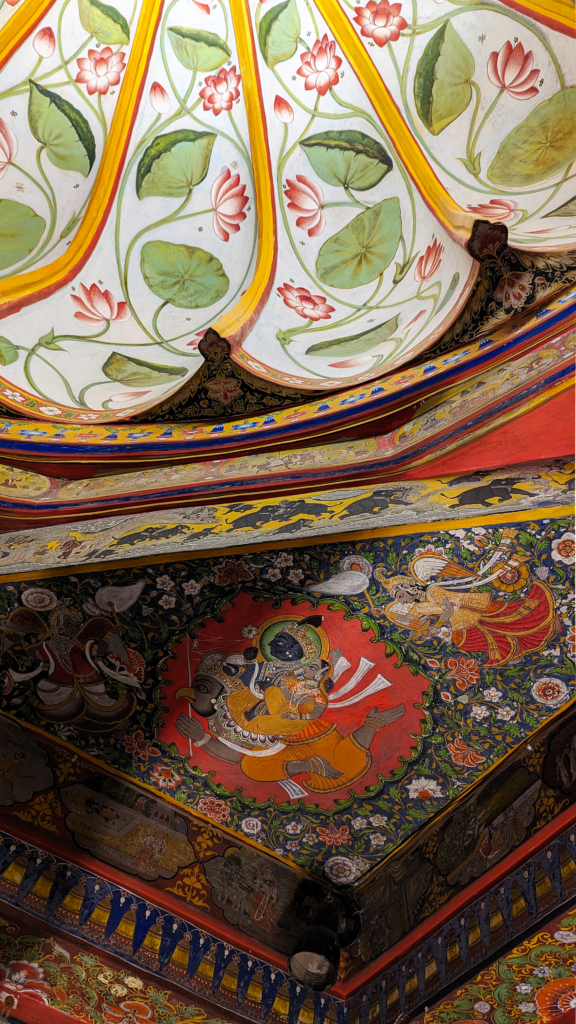
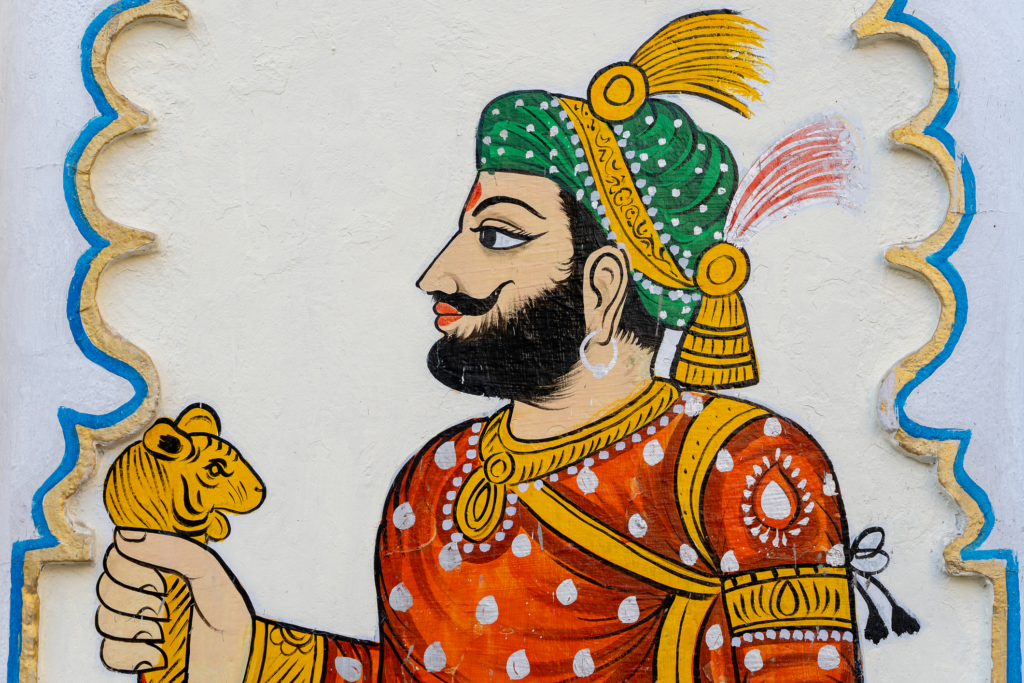
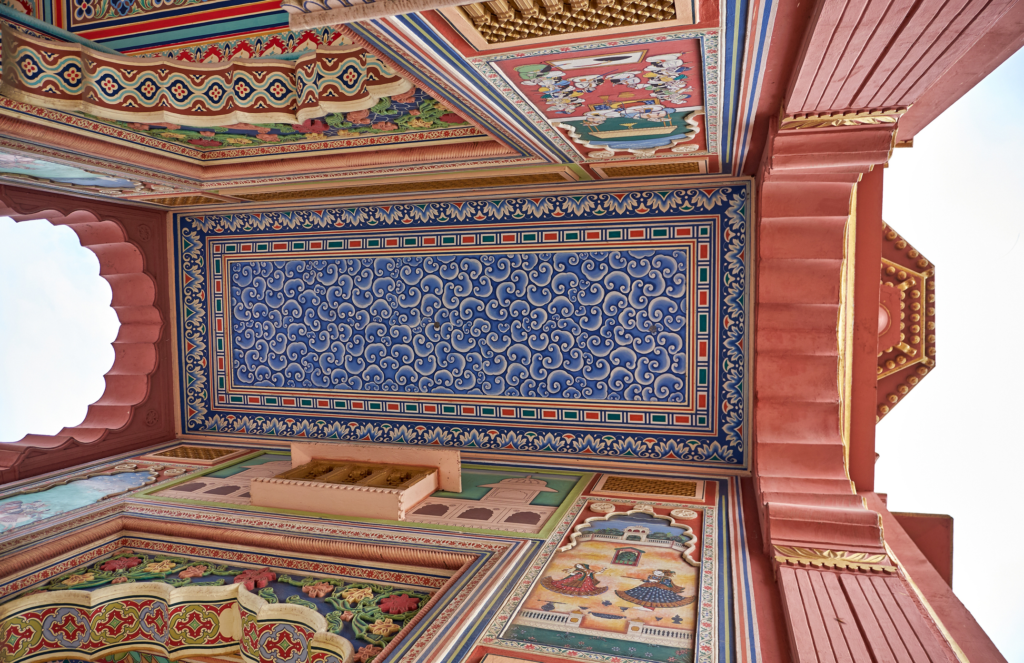
A flower scarcely larger than a fingernail has individual petals. A border becomes a procession of leaves, birds and vines. Clothing carries pattern within pattern. Architecture is articulated window by window. A face may be rendered with a handful of exquisitely controlled lines.
This is not simply decoration.
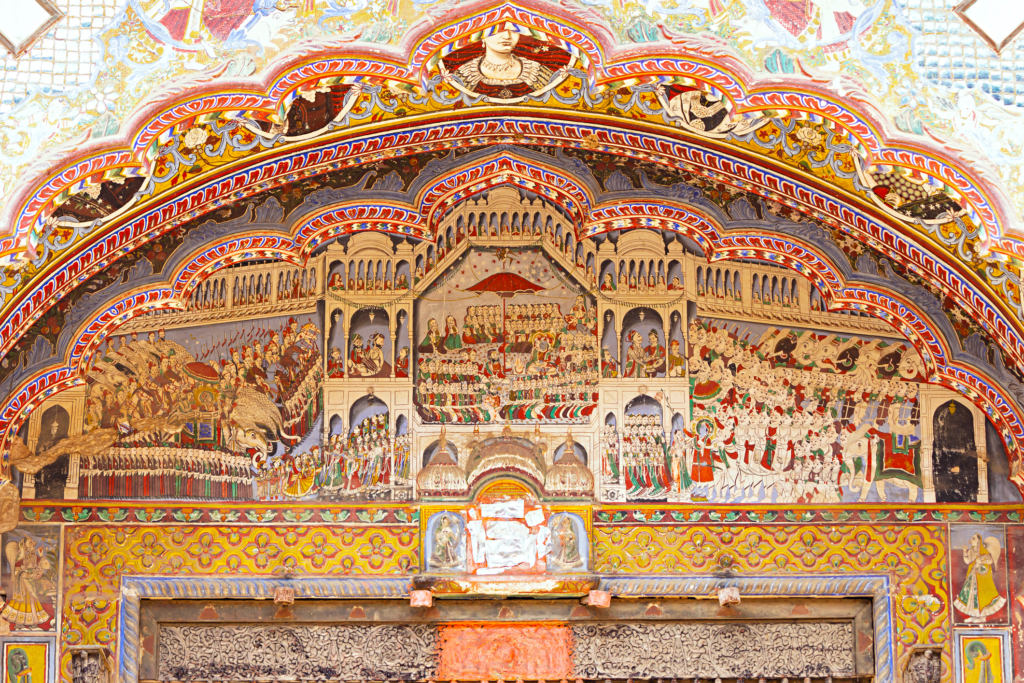
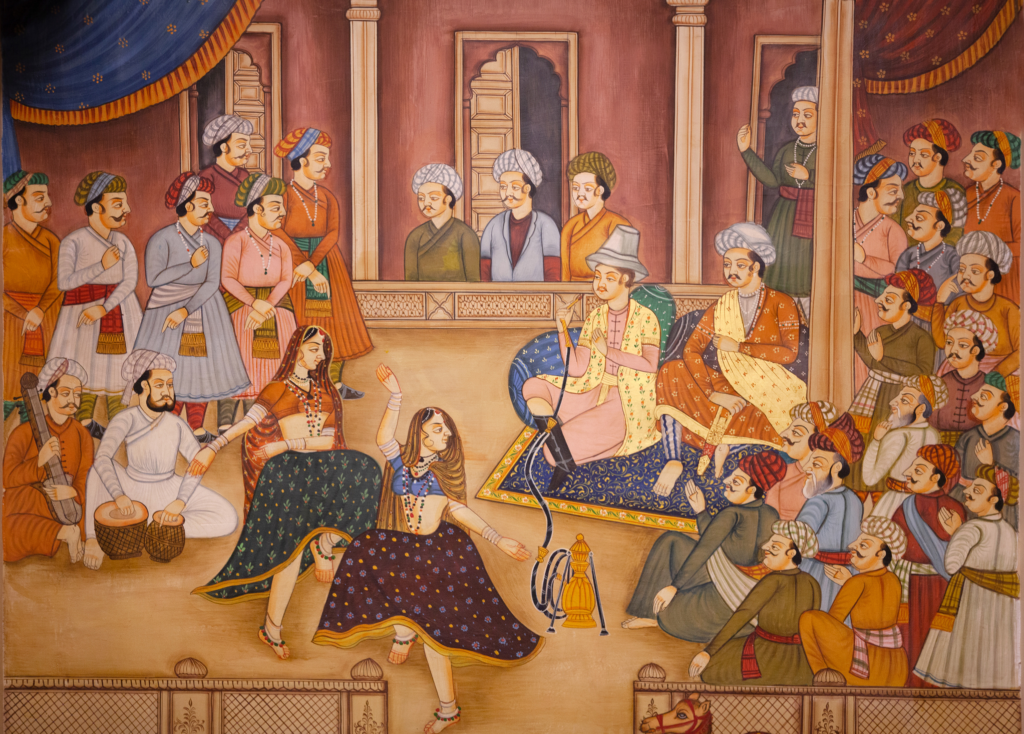
It belongs to a long artistic tradition that flourished in the royal courts of Rajasthan, where distinct schools of painting developed in places including Jaipur, Mewar, Marwar, Bundi, Kota and Bikaner. Artists depicted court life and portraiture alongside poetry, music, hunting, nature and stories drawn from Hindu devotional and literary traditions.
The scale could be intimate. The ambition was not.
The Tiny Holes Behind the Painting
One of the most fascinating techniques associated with these workshops is known as pricking and pouncing.
An artist could begin with a master drawing. Using a very fine needle, tiny holes were pricked along its important contours. The perforated drawing was then placed over another surface and finely powdered charcoal was passed through the holes.
Remove the drawing and something almost ghostlike remained:
a constellation of tiny dots.
Those dots provided the framework from which the artist could redraw the composition and begin the painstaking work of painting.
The method allowed important designs and proportions to pass from one work to another. In Rajasthan, surviving drawings still bear the evidence of this process — pin-pricked outlines and traces of charcoal left by artists working generations ago.
It is an intriguing idea.
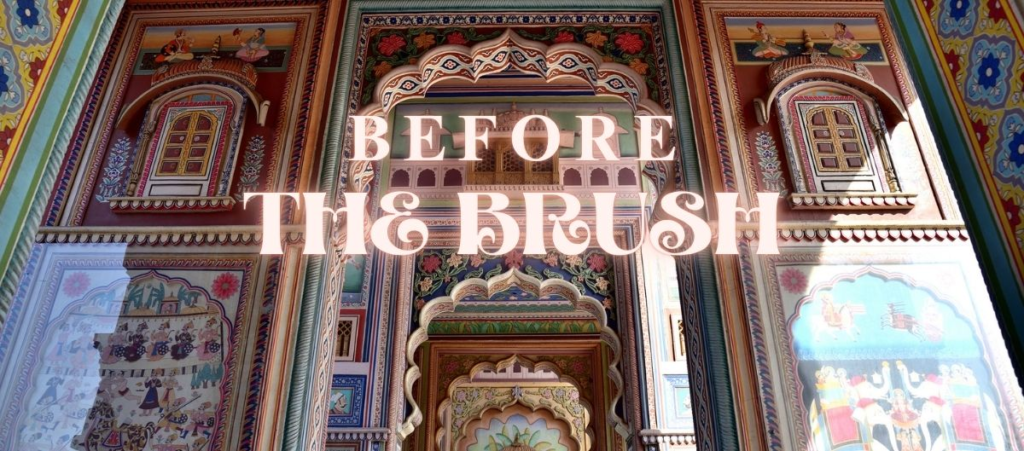
Before the brush created the flower, the bird or the curling vine, there might first have been a series of almost invisible holes.
A Workshop Was More Than One Artist
These paintings emerged from an atelier tradition.
Knowledge was learned through observation, repetition and apprenticeship. Drawings and successful compositions could remain within workshops and be used to teach another generation of painters. The hand mattered enormously.
So did the accumulated knowledge behind the hand.
From Palace Painting to the Contemporary Object
This is where the story becomes particularly interesting to us at Collected Abroad.
Traditional craftsmanship does not have to remain behind museum glass. Across Rajasthan today, artists and designers continue to work with skills and visual languages rooted in older painting traditions. But the canvas can change.
A painted surface may become a box.
A functional object can become the setting for an elaborate landscape.
Flowers, animals, architecture and fantastical scenes can travel from the language of miniature painting onto objects intended to be handled, opened, used and lived with.
And suddenly the distinction between art and object becomes much less useful.
Why Bespoke Matters
There is another consequence of making things this way. Perfect repetition disappears.
A hand-painted object cannot be absolutely identical to the one before it. A leaf turns slightly differently. A bird acquires its own expression. A line carries the pressure of the person who painted it.
These are not defects to be engineered away.
They are evidence that somebody was there, that a human hand made decisions.
Evidence of time.
In a world remarkably good at producing thousands of perfectly identical things, we believe this increasingly feels like luxury.