
Among the many wonders I encountered on my recent trip to Egypt, the Eye of Horus was a symbol that seemed to follow me everywhere. Whether exploring grand temples, browsing local markets, or marveling at ancient artifacts, this mystical emblem was a constant presence.
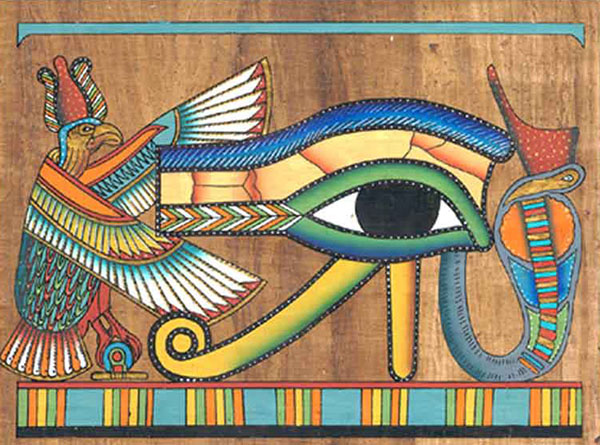
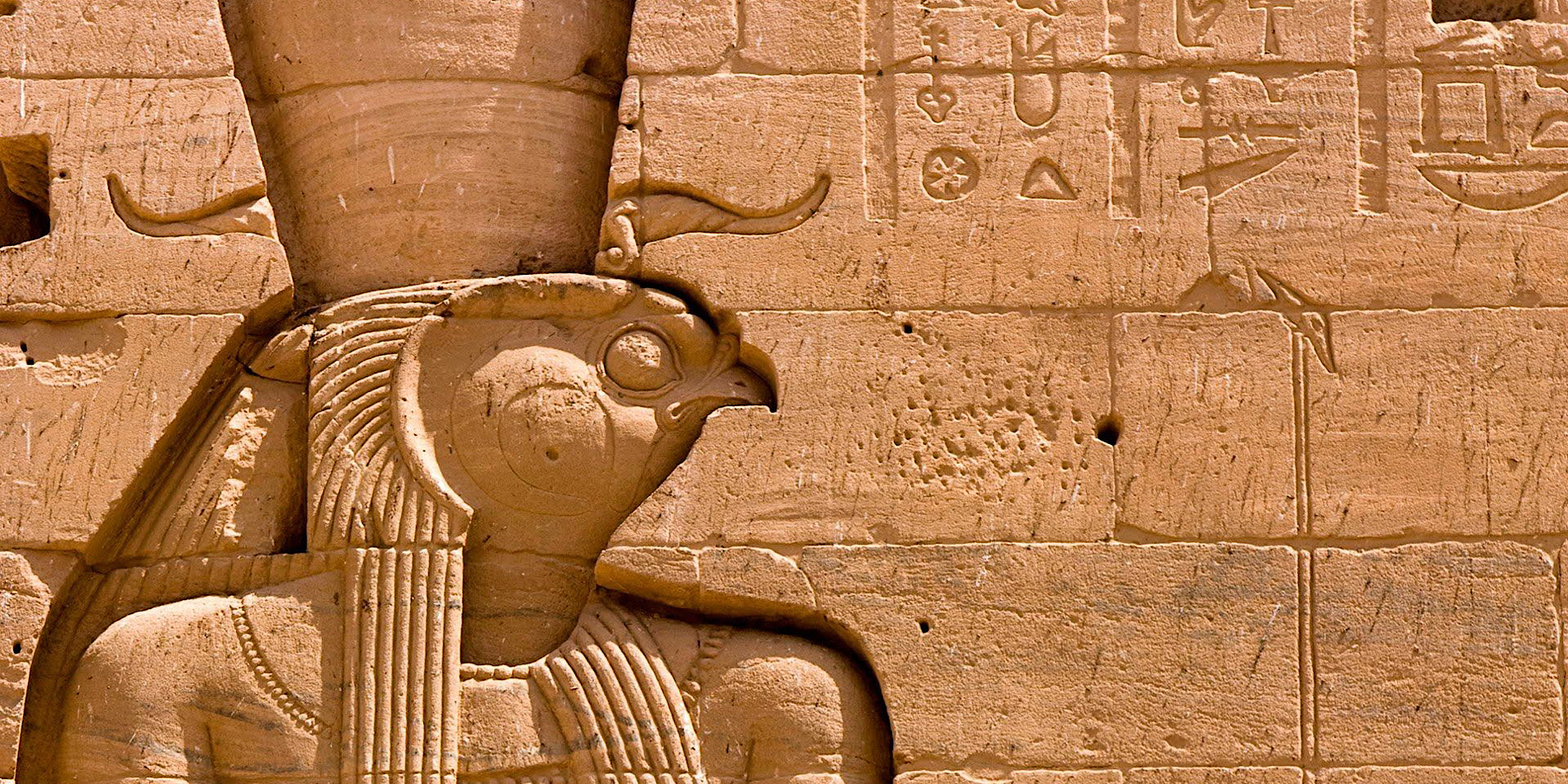
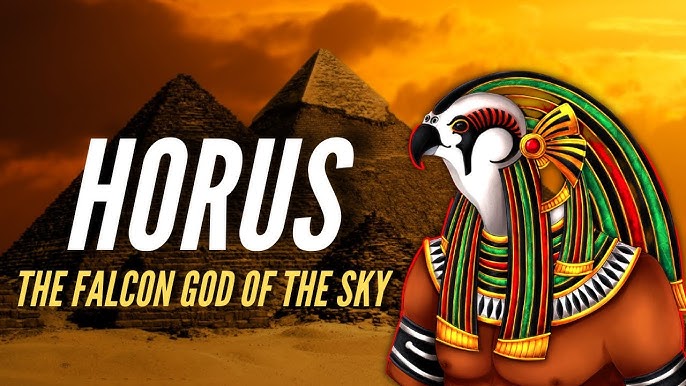
The Eye of Horus, also known as Wedjat or Udjat, comes from ancient Egyptian mythology. It is linked to Horus, the falcon-headed god associated with the sky, kingship, and divine justice.
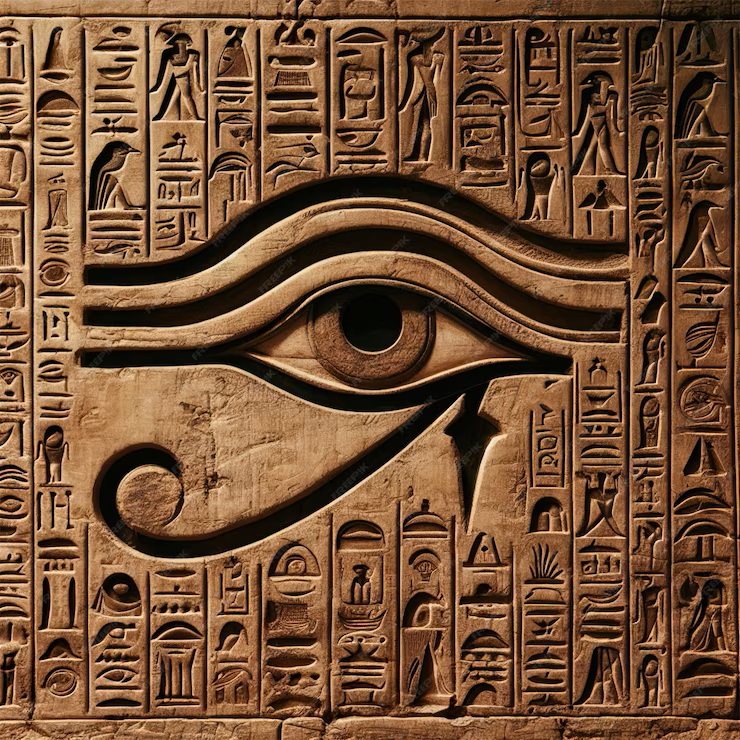
According to legend, Horus engaged in a fierce battle with Set, the god of chaos, to avenge the death of his father, Osiris. During their struggle, Set gouged out Horus’s left eye, damaging it. However, the god Thoth, associated with wisdom and magic, healed the eye, restoring Horus’s vision. Because of this, the Eye of Horus became a symbol of healing and restoration.

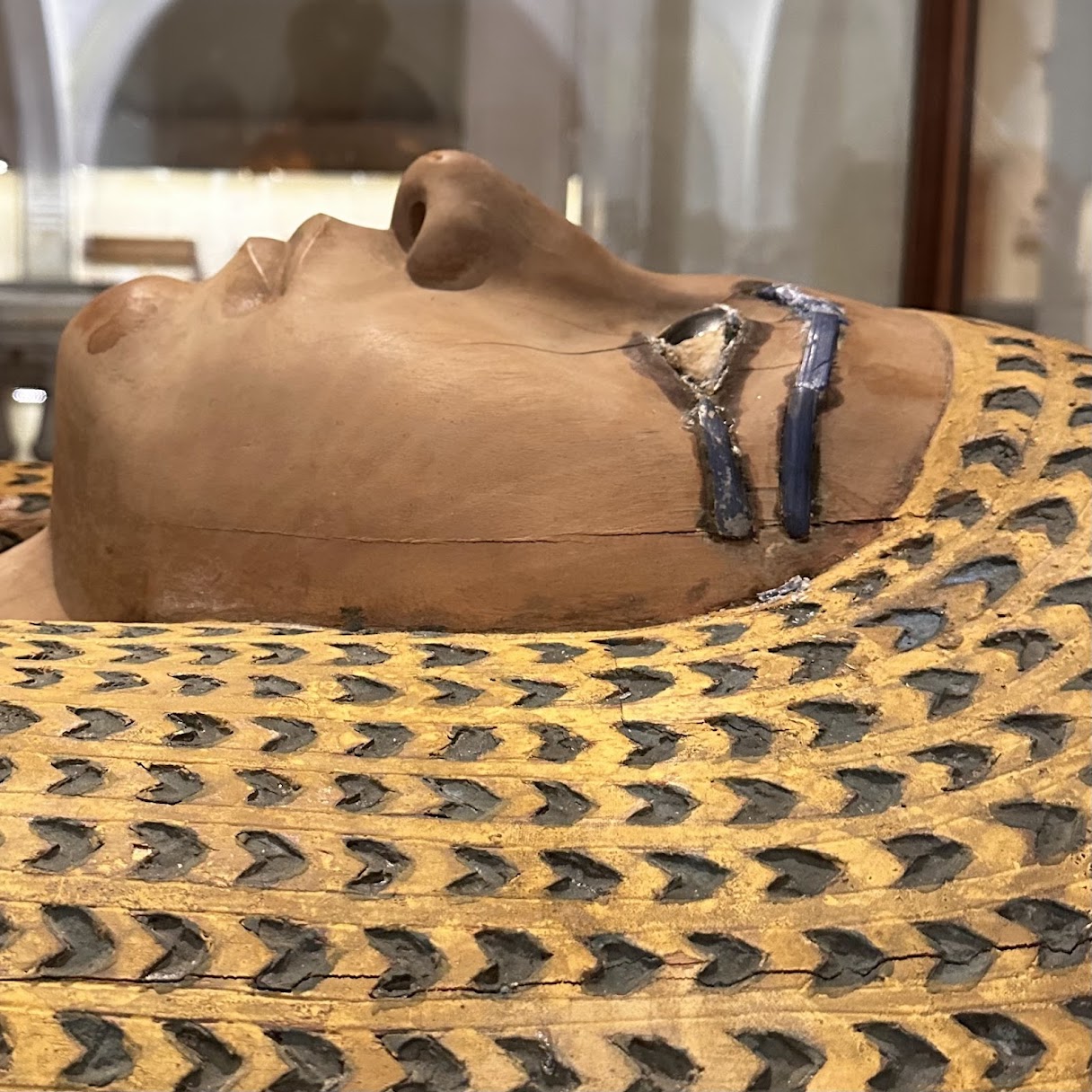
The Eye of Horus was widely used in ancient Egypt, appearing on amulets, tombs, coffins and temple carvings. Sailors often painted it on their boats to ensure safe travels, while priests and healers invoked its power for spiritual protection. The symbol was also commonly placed on mummies to guide the deceased safely into the afterlife.
The Eye of Horus was used in ancient Egyptian mathematics. Each section of the eye was thought to represent fractions that together approximated a whole.

My journey took me to the Temple of Edfu, one of the best-preserved temples in Egypt, dedicated to Horus himself. The temple walls were adorned with detailed carvings of Horus, often depicted with his iconic eye. It was thrilling to see the symbol in its original historical context, surrounded by grand columns and hieroglyphics that told stories from thousands of years ago.
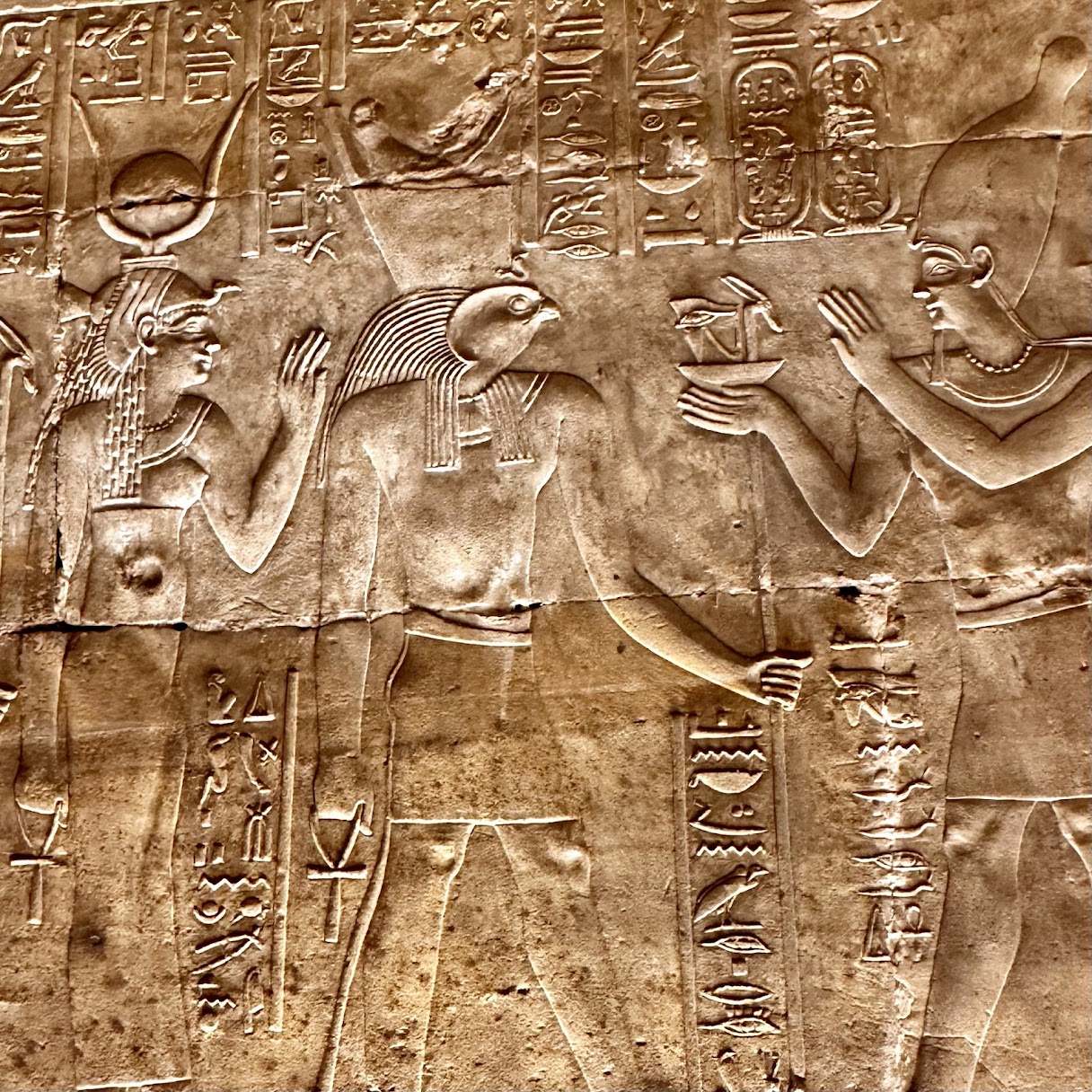
Another breathtaking location was Karnak, near Luxor. While wandering through the massive pylons and obelisks, I spotted the Eye of Horus in various reliefs and inscriptions. The scale of Karnak was overwhelming, but finding familiar symbols like the Eye of Horus made it feel more personal and connected to the people who once worshiped here.


At the Egyptian Museum in Cairo. Here, I saw jewelry, amulets, and funerary objects adorned with the Eye of Horus. The symbol was commonly placed on tombs to offer protection in the afterlife, a testament to its enduring significance. One of the most stunning pieces was an eye-shaped inlay from the treasures of King Tutankhamun’s tomb, crafted with exquisite detail in gold and lapis lazuli.

Beyond temples and museums, I found the Eye of Horus in vibrant local markets. Strolling through the Khan El Khalili Bazaar in Cairo, I saw it on necklaces, bracelets, and decorative items.

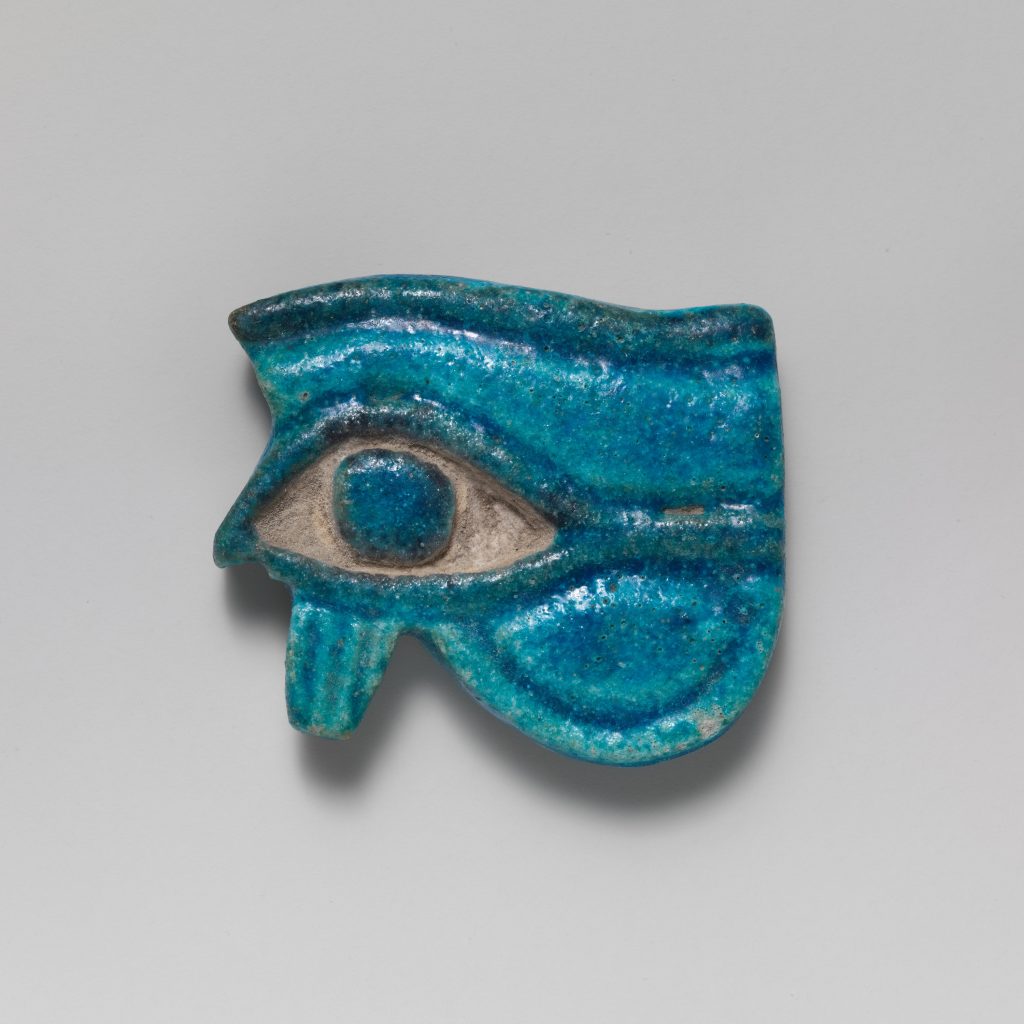
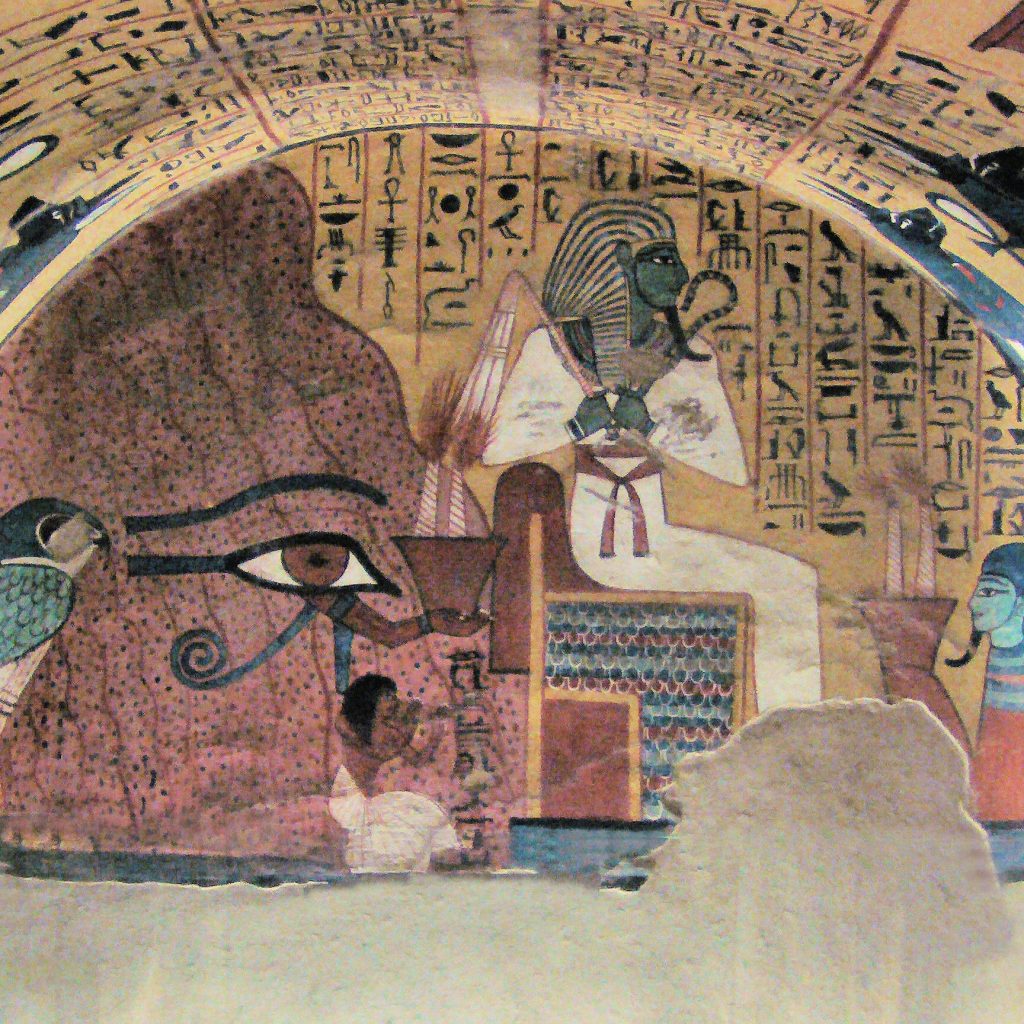
Even in contemporary Egypt, the Eye of Horus remains relevant. I noticed it in architectural details, on shop signs, and even in everyday conversations when locals spoke of protection and good fortune. Some Egyptians still wear it as a charm or tattoo, believing in its protective power and is often associated with mysticism. The symbol has also made its way into popular culture, appearing in films, literature, and video games.
The Eye of Horus became a recurring theme throughout my adventure, connecting the past with the present, offering a sense of continuity and resilience. Whether in an ancient temple or a bustling market, this symbol represents the richness of Egyptian history and the enduring power of its myths. The Eye of Horus is more than just an artifact; it’s a doorway into a civilization that still speaks to us across the ages.