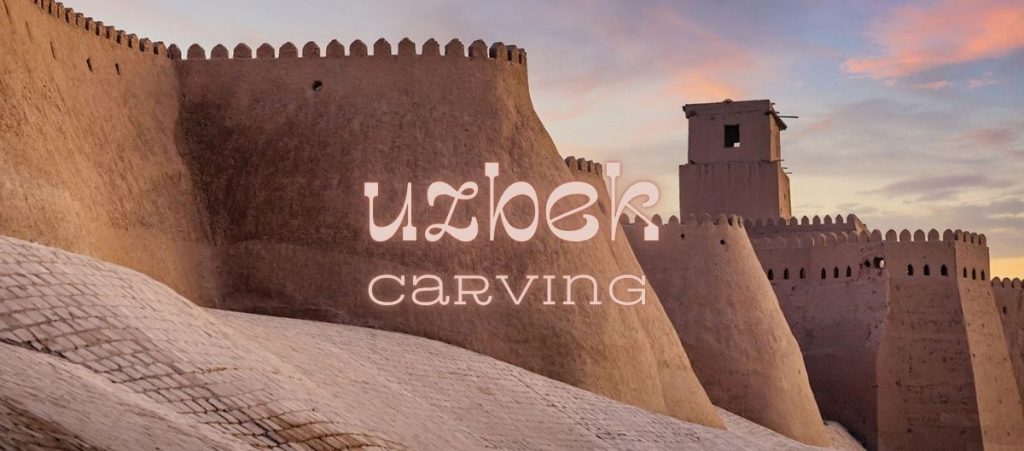
The walls of the Khiva’s Ichan Kala or “Old Town” are a living museum and one of the most intimate ways to connect with the city’s soul is through its woodworking tradition, an ancient art form that continues to flourish today.
A Legacy Carved in Wood
Wood has long held a sacred and functional role in Central Asian life. In Khiva, woodworking is a spiritual and cultural expression passed down from master to apprentice for generations.


Elaborately carved doors and columns to ornamental window screens, wood is everywhere in Khiva. It supports the mosques and madrasas, decorates the caravanserais, and enhances the quiet majesty of traditional homes, known as khonas.

The work blends Persian, Islamic, and Turkic motifs, creating a unique vocabulary of swirling vines and floral arabesques—each design telling its own silent story in wood.
The Master Craftsmen of Khiva


Inside the Ichan Kala’s maze-like alleys, you’ll find small workshops where Ustos, master woodworkers, shape local elm, walnut, apricot, and mulberry wood with time-worn tools and infinite patience. Some of the most celebrated woodworkers, like the descendants of Master Usto Kamiljon Jalolov, have contributed to restorations of Khiva’s most iconic structures.
Watching a craftsman work is mesmerizing. First, he sketches the pattern directly onto the wood by hand. Then, with chisels, mallets, and files—tools often made by the artisans themselves—he brings the design to life. There is no automation here, no shortcuts. Just skill, memory, and rhythm.
Iconic Works to Look For
Carved Columns of Juma Mosque: One of Khiva’s most legendary woodworking achievements is the Juma Mosque, with over 200 wooden columns, some dating back to the 10th century!! Each one is unique, many featuring Zoroastrian, Islamic, and Buddhist design elements.

Decorative Doors and Lattices: Almost every doorway in Khiva is a work of art. The patterns are not only beautiful but also symbolic—designed to protect, welcome, and inspire.
Souvenir Boxes, Lauh Stands and Walking Sticks: Smaller, modern expressions of this heritage can be found in Khiva’s shops and workshops.

A lauh is a collapsible wooden rest for books, one of the most original articles ever produced by Uzbek woodcarvers. This sophisticated construction is made from a single piece of wood without nails, clay or hinges. Experienced craftsmen can make a lauh consisting of ten to twelve tiers.

I visited the workshops around the Pakhlavan Mahmoud Mausoleum or near the Tosh-Hovli Palace are particularly friendly to visitors.

Preserving a Fading Art
While Khiva’s woodworking tradition is UNESCO-protected and deeply respected, like many handcrafts, it faces challenges from modernization and mass production. Supporting local artisans by purchasing directly from their workshops helps keep these traditions alive. Many families depend on this work for their livelihoods—and they carry the honor of keeping their ancestors’ skills vibrant.
Woodworking in Khiva is more than a craft—it’s a language of devotion, geometry, and identity. Whether you’re an artist, a history buff, or a curious traveler, exploring this ancient tradition is certain to enrich your appreciation of this amazing city.
Amazing art, skill, and master craftsmanship!! My worldly education continues thru you Pammy!! Love you!!❤️??❤️