Essential oils are part of our culture…used in aromatherapy sessions, relaxation techniques, in massage therapy, for holistic medicinal purposes, in yoga studios and an expansive range of cosmetics, perfumes and skincare.
And as a lifelong scent devotee…I found Egypt a mecca for magnificent essential oils which, as I write this, scent my home with rich and complex fragrances. My recommendations are at the end of this post.

The Ancient Egyptians were committed to this practice, using a variety of perfumes and oils in daily hygiene and health care but also in elaborate rituals focused on the afterlife. Discoveries from Tutankhamun’s tomb showed the remains of more than thirty carved vessels with over 350 litres of essential oils and perfumes.


Myrrh and frankincense, two of the most important, were burned in temple rituals honoring the deities. These were derived from trading with other peoples from trees not native to Egypt. Both frankincense and myrrh are signature in Egypt’s trade with the land of Punt, an ancient kingdom known from Ancient Egyptian trade records, which recent evidence locates it in northwestern Eritrea.

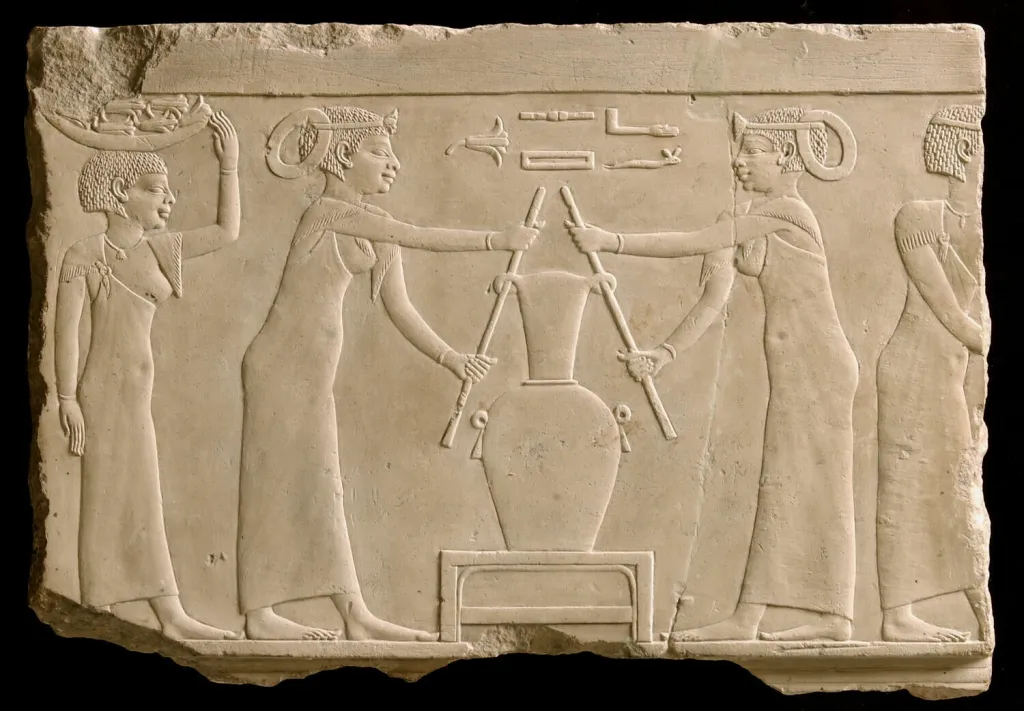
Tomb and temple art show a variety of beautiful references to the use of perfumed oils. Many ornately decorated and carved perfume bottles are displayed in internationally famed museums: the Louvre, the British Museum and the Metropolitan Museum of Art.


New Kingdom, Amarna Period, ca. 1353–1336 B.C. Metropolitan Museum
The fertile Nile Valley hosted a diversity of flowers and plants which were used, some more prized than others. But beauty, purity and lovely fragrances were prized in an era lacking soap and water.
The Lotus, also known as White and blue water lily represented the perspiration of the gods and themes of rebirth and regeneration. It was used as the ancient Egyptian’s primary perfume fragrance. Henna was also a feature and was popular as a staining choice for hands, palms and feet. Other herbs and spices such as cinnamon bark, thyme, and coriander added to the vast repertoire used by the Egyptians.


Oils were greatly valued in the mortal and afterlife. Kyphi was made of frankincense, myrrh, mastic, pine resin, cinnamon, cardamom, saffron, juniper, mint, and other herbs and spices. The scent is described as completely elevating. I would agree!
I visited the noted Al Fayed Perfume Company in Aswan and purchased a wonderful selection of essential oils to be used for aromatherapy, medicinal and cosmetic purposes. As I write this blog post, my home is filled with the aromas of Oud…rich in spice, fragrant with a deep woodsy scent and perfect for this winter afternoon.
If only I could visit this world as it was just for a day…
But I can suppose an olfactory journey might leave an impression like a past-life memory.
A collection of traditionally prepared essential oils sounds to me the absolute height of personal indulgence in the best way.